
Thermal drones deployed to monitor native animals under threat
Specialised drones are making it easier to find and monitor some of Australia’s most elusive and endangered animals in native forests, according to new research.
Specialised drones are making it easier to find and monitor some of Australia’s most elusive and endangered animals in native forests, according to new research.

A new study shows that insect populations are rapidly declining even in relatively undisturbed landscapes
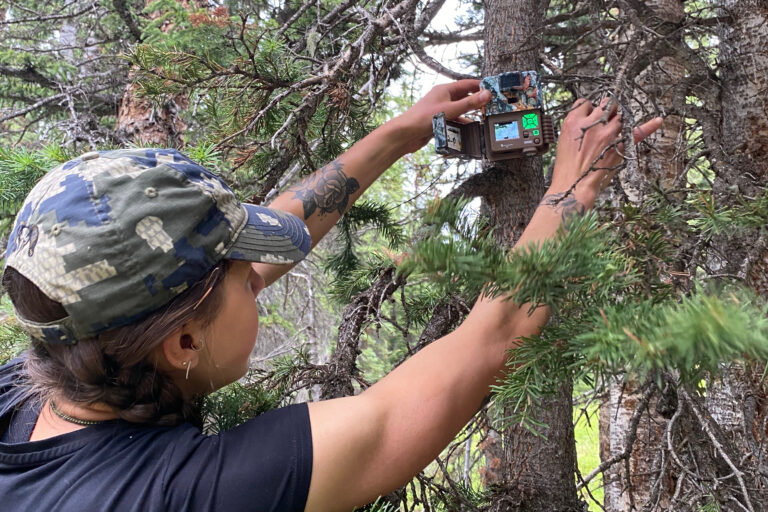
How wild ungulates react to hiking trails, the key to invasive plants’ success and more from ESA’s journals.

A new study using participatory science data reveals regional variation in the ways wildfires impact bird populations in the U.S. in unprecedented detail.
A new study finds that the global biodiversity targets adopted in 2022 are science-based and represent a major step forward.

The research offers new insights into how elk and mule deer respond to trail use and human presence.
Both local and migratory birds are spending less time in the region due to climate change and urbanization, according to a new study.
By analyzing 20 years of fire behavior across more than 300 wildfires in the Four Corners region, a research team found that even modest increases in aspen cover dramatically reduced the rate at which fires spread.

At the ESA Annual Meeting in Baltimore, Md., urban ecology will be front and center — fitting for a city that has long been a hub for research on nature in urban environments.
Water resource managers are increasingly investigating removing dams to restore connectivity and improve aquatic habitats, water quality and fish passage.
Whales are swimming further than previously estimated – up to 20% more – according to a new study.
With this year’s Annual Meeting taking place in Baltimore, Maryland, research on the Chesapeake Bay and its watershed takes on special relevance.
Global biodiversity research is skewed towards wealthier nations. A new study exposes inequities in science, and calls for more inclusive collaboration.
The study identifies ecological thresholds to promote biodiversity without sacrificing the profitability of olive crops.
ESA’s upcoming Annual Meeting in Baltimore, Md., Aug. 10–15, features a diverse array of talks and posters showcasing the latest applications of AI in ecology.
A new study finds evidence that stands of aspen trees could resist wildfires by slowing a fire’s advance or changing its course.
New ‘facilitated migration’ framework gives water managers a playbook for getting more juvenile Chinook salmon from the Central Valley to the sea

Richard “Dick” Tracy, an emeritus professor in the University of Nevada, Reno Department of Biology, was recently named a 2025 Fellow of the Ecological Society of America.
Ripon College graduate Sarah Anderson was selected as one of the Ecological Society of America’s 2025 Early Career Fellows for her landscape ecology work.
Symposia will be a focal point of ESA’s upcoming Annual Meeting in Baltimore, Maryland, Aug. 10-15, addressing the frontiers of ecological research, wetland restoration in the Chesapeake Bay Watershed, deep soil carbon storage and much more.